

The technology sector is experiencing an industrial revolution at an incredible pace. In this competitive environment, partnerships have shifted from simple gestures or brand collaborations to fundamental components of survival, infrastructure, and the future of computation. A key example of this is the alliance between Google and the AI research lab Anthropic. This relationship goes beyond a financial deal; it’s a blend of capital, computing resources, and strategic decisions that shapes the current landscape of generative artificial intelligence.
To grasp the significance of the Google and Anthropic partnership, you need to go beyond the headlines of billion-dollar investments. Focus on the server racks, chip designs, boardrooms, and evolving thoughts on machine intelligence. This story details how the company that organizes the world’s information is collaborating with a startup aimed at making that information secure, all to create the engine that will drive the next decade of economic growth.
The Context of the AI Arms Race
The story begins with the major impact of ChatGPT’s release. For years, Google led AI research unquestioned. Their transformer paper serves as the foundation for today’s Large Language Models. However, when OpenAI launched its consumer product, it caused a crisis in Mountain View. Google needed to speed up its timelines while also maintaining its lead in the platform competition.
Enter Anthropic, founded by former OpenAI executives who left due to differences in safety philosophy and business direction. Anthropic was more than just another startup; it was a reputable research lab with its model, Claude, which competed with the best. For Google, investing in Anthropic was a smart move. It allowed Google to support a strong contender that was not part of its internal team, effectively spreading its risks in model development. If the AI landscape favors a model emphasizing “Constitutional AI” over raw capability, Google would have a stake in that future.
This context is crucial as it shows the partnership as a federation rather than a merger. Google is not buying Anthropic; it is supporting it. This difference allows Anthropic to remain independent and focused on its safety-first goals while Google gains from cloud revenue and expanding its ecosystem. Their relationship is mutually beneficial, with one side providing expertise and the other supplying essential resources.
The Financial Structure of the Deal
The figures involved are impressive, but the deal’s structure is where it gets interesting. Google committed to billions in investment, but a significant part of modern AI deals includes credits for cloud computing. This has drawn attention from financial analysts and regulators.
When a tech giant invests in an AI startup, the funding often comes with a requirement: the startup must spend a specific amount on the investor’s cloud services. In this case, Anthropic agreed to use Google Cloud as its main provider for training and deploying its models. This circular economy benefits both sides. Anthropic receives the necessary funds to cover the high costs of training modern neural networks. Google, in return, secures a prominent customer for its cloud division, ensuring their investment eventually returns as revenue.
This setup also serves as protection for Google. By tying Anthropic closely to the Google Cloud ecosystem, they avoid a situation where a major AI player relies entirely on Amazon Web Services or Microsoft Azure. In the race for cloud dominance, having the workload of a leading foundation model provider is prestigious and provides a significant technical test that helps improve the infrastructure for all customers.
The Hardware Advantage: TPUs vs. GPUs
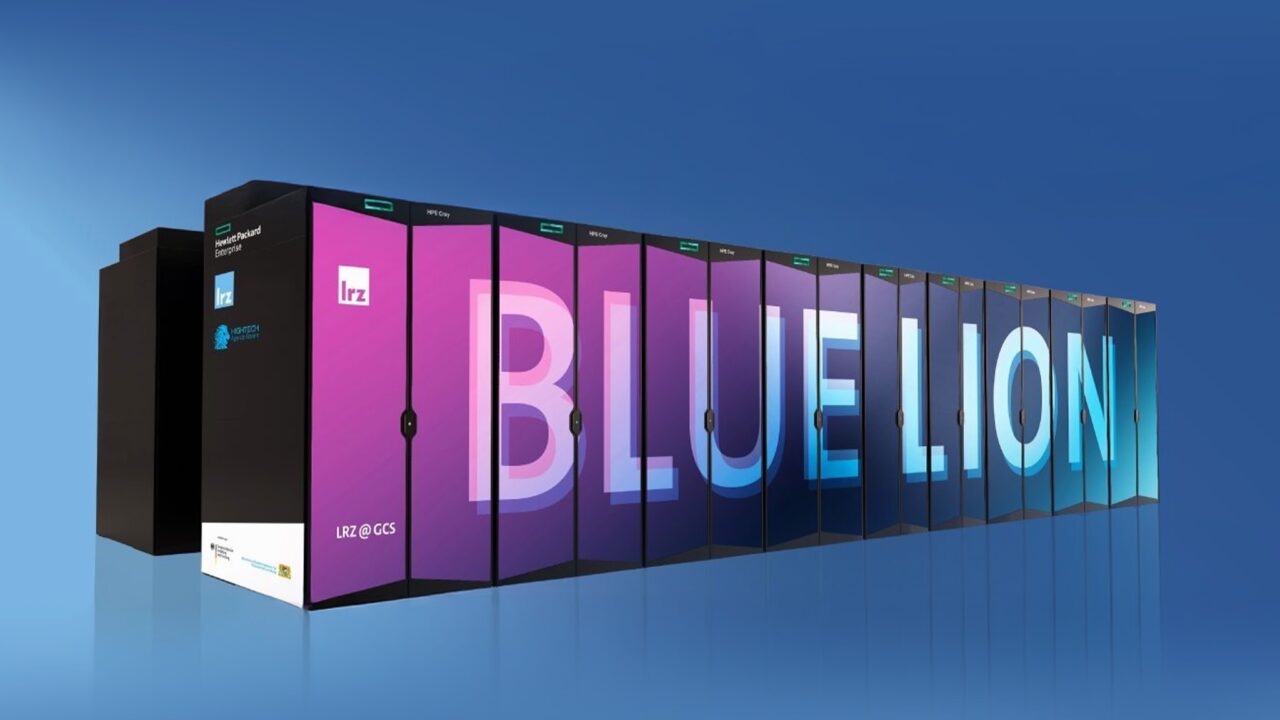
At the core of this alliance is hardware. While much of the AI field scrambles for Nvidia GPUs, Google has a unique advantage: the Tensor Processing Unit, or TPU. These custom-designed circuits are made specifically to enhance machine learning tasks.
Anthropic’s choice to use Google’s TPUs for training Claude signifies a valued technical endorsement. Training a complex model like Claude requires linking thousands of chips in a fast network to process vast amounts of text data. Google’s TPU pods are created for this type of large-scale work. They enable quicker training and better energy efficiency than typical hardware in many scenarios.
For Anthropic, having access to this special hardware means they are not entirely dependent on the limited supply of Nvidia chips. They have a dedicated route on Google’s superhighway. For Google, having Anthropic push the boundaries of the TPU v5p and future versions provides essential feedback. It shows the market that Google’s hardware can train the most advanced models. This is crucial as Google aims to attract other enterprise customers away from competitors.
Vertex AI: The Distribution Engine
Technology is only valuable when it reaches developers and businesses. This is where Vertex AI, Google’s machine learning platform, becomes important. Integrating Claude into the Vertex AI Model Garden is perhaps the most direct benefit of this partnership for everyday users.
The Model Garden is set up as a comprehensive resource for AI. Google recognizes that companies will eventually not depend on just one model. A law firm might choose Gemini for analyzing video evidence but prefer Claude for drafting complex legal documents due to its extensive context handling and reasoning capabilities. By hosting Claude within Vertex AI, Google eliminates the hassle of changing providers.
This integration also brings key benefits regarding data management. Businesses often fear sending their sensitive data to outside APIs where it might be used for training. Since Claude is hosted within the Google Cloud ecosystem, customers enjoy Google’s enterprise-grade security, compliance, and data control. A healthcare organization can analyze patient records with Claude, knowing the data stays within their Virtual Private Cloud, protected by the same security measures that guard Google Search and Gmail.
The Philosophical Divide: Constitutional AI vs. Multimodality
While the companies work together, their products reflect different philosophies in artificial intelligence. Understanding this difference is vital to grasp why the partnership succeeds; they complement each other rather than compete directly.
Anthropic is known for its “Constitutional AI” approach. This method involves training the model with a set of guiding principles—a constitution—that shapes its behavior. Instead of relying solely on human reviewers for responses (a method that can be biased), Anthropic uses AI to evaluate AI against its constitution. The result is Claude, a model that is often seen as safer, more controllable, and less likely to generate problematic outputs in sensitive situations. This makes Claude appealing for regulated sectors like finance and government.
In contrast, Google’s Gemini adopts a “native multimodal” approach. From the start of its training, Gemini was exposed to code, text, images, video, and audio together. This gives it unique abilities to understand information across different formats. While Claude excels in deep textual reasoning and coding, Gemini performs well in tasks that require synthesizing elements from a video or analyzing a complex diagram on the spot.
By offering both, the Google-Anthropic partnership meets a wide range of customer needs. Google does not need to push Gemini to be everything for everyone because they have Claude available. This keeps products focused and allows each team to strengthen their unique research approach.
The “Frenemy” Dynamic
Despite their close collaboration, there is undeniable competitive tension. Google and Anthropic are, in many ways, “frenemies.” The Google Gemini team works to create a model that outperforms Claude, while the Anthropic team seeks to surpass Gemini.
This internal competition benefits the ecosystem by preventing stagnation. However, it creates a complex situation for sales teams. A Google Cloud salesperson must balance promoting the benefits of Google’s ecosystem while remaining neutral about whether customers choose the first-party model (Gemini) or the partner model (Claude).
This situation is further complicated by Anthropic’s ties to Amazon. Amazon has invested heavily in Anthropic, making the startup one of the few “cloud-agnostic” AI leaders. Anthropic operates on both AWS and Google Cloud. This neutrality is a strategic move for Anthropic to avoid dependency on a single provider. For Google, it means they need to continually prove themselves to Anthropic with better hardware and software offerings, instead of relying solely on the investment agreement.
Google Anthropic partnership :
The Regulatory Microscope
The scale of this alliance has naturally attracted the gaze of global regulators. The Federal Trade Commission in the United States and the Competition and Markets Authority in the United Kingdom have both launched inquiries into the nature of investments made by cloud providers into AI startups.
The concern is that these partnerships are “quasi-mergers” designed to skirt antitrust review. If Google cannot buy Anthropic outright due to monopoly concerns, investing billions and controlling the compute infrastructure achieves a similar outcome: influence. Regulators are worried that this creates a market where only those aligned with Big Tech can survive.
However, Google and Anthropic argue that this partnership actually enhances competition. By supporting an alternative to the Microsoft-OpenAI dominance, they are ensuring the market remains multipolar. Without Google’s backing, it is unclear if Anthropic could have scaled its infrastructure fast enough to remain a viable competitor to OpenAI. Thus, the alliance arguably keeps the market democratic by ensuring there are multiple frontier models available to consumers and developers.
Implications for the Developer Ecosystem
For the software engineer or the startup founder, this alliance changes the calculus of building applications. In the past, switching between AI providers meant rewriting code, changing API keys, and dealing with different latency profiles. The Google-Anthropic integration simplifies this.
Developers can now build “compound AI systems.” These are applications that route queries to different models based on difficulty and cost. A simple user query might be handled by a lightweight version of Gemini Flash for speed and low cost, while a complex reasoning task within the same chat session is routed to Claude 3.5 Sonnet for maximum accuracy.
Furthermore, the integration with Google’s wider ecosystem—like Firebase, BigQuery, and Looker—means that Claude becomes more than just a chatbot; it becomes a data analyst. A developer can point Claude at a massive BigQuery dataset and ask for insights, leveraging Google’s data processing speed with Anthropic’s reasoning capability. This moves the industry away from “chatting with AI” toward “working with AI.”
The Role of AI Agents and Future Workflows
Looking toward the horizon, the partnership is set to play a pivotal role in the rise of AI Agents. Agents are systems that can take action, not just generate text. They can browse the web, use software tools, and execute complex workflows.
Anthropic has shown great promise with Claude’s ability to use computers—literally viewing a screen and moving a cursor. Google, meanwhile, has deep integrations into the applications where work actually happens: Docs, Sheets, Gmail, and Calendar. The convergence of these two capabilities is inevitable.
Imagine an Agent powered by Claude’s reasoning engine that lives inside Google Workspace. It could autonomously manage a project, drafting emails in Gmail, updating trackers in Sheets, and organizing research in Drive. The Google-Anthropic alliance provides the perfect substrate for this kind of agentic workflow. Google owns the interface (the browser and the apps), and Anthropic provides the high-agency intelligence required to navigate it reliably.Readmore…
Trust, Safety, and the Enterprise Customer
The final, and perhaps most critical, pillar of this alliance is trust. Corporate boards are hesitant to adopt GenAI due to risks regarding copyright, data leakage, and brand reputation. If an AI chatbot insults a customer or reveals trade secrets, the liability is massive.
Anthropic’s brand is built entirely on safety. By wrapping that brand in Google’s security infrastructure, the alliance creates a “safe harbor” for enterprise adoption. It allows a CTO to go to their board and say, “We are using the safest model on the market, hosted on the most secure cloud.” This dual validation is essential for moving AI from experimental pilots to mission-critical production systems.
Moreover, Google offers indemnification for users of these models within Vertex AI. This legal shield protects companies from potential copyright lawsuits, further lowering the barrier to entry. It shows that Google is willing to put its own legal weight behind the partnership, signaling long-term commitment.
Conclusion: The New Foundation of AI
The alliance between Google and Anthropic is a defining structure of the modern technology landscape. It is a relationship born out of necessity, forged in competition, and cemented by the mutual need for scale.
For Google, it is a diversification strategy that ensures they remain the infrastructure layer for the next generation of intelligence, regardless of which specific model wins the popularity contest. For Anthropic, it is the lifeline of capital and silicon that allows them to pursue their safety-focused mission in a capital-intensive industry.
As we move forward, this partnership will likely deepen. We will see tighter integrations between hardware and software, more fluid movement of data between models, and a continued united front against competitors. While they remain distinct companies with distinct cultures, their fates are now intertwined. In the great game of building the artificial mind, Google and Anthropic have decided that they are stronger together than they are apart.
For the rest of us—developers, business leaders, and consumers—this means we are entering an era of choice. We are not forced into a monochrome future dominated by a single AI provider. Instead, we have access to a diverse ecosystem of intelligence, powered by the massive engines of Google and refined by the careful craftsmanship of Anthropic. It is a partnership that balances raw power with necessary caution, and in doing so, it may very well shape the safe and prosperous development of artificial general intelligence.
The future of AI is not just about who has the smartest model; it is about who has the most robust infrastructure to deliver that intelligence to the world. On that front, the Google-Anthropic alliance is building a fortress that will stand for years to come.
Key Takeaways from the Alliance
Strategic Hedging Google effectively bets on multiple outcomes by developing Gemini internally while funding Claude externally. This ensures they capture value regardless of which model architecture prevails in the market.
Infrastructure Dominance The deal cements Google Cloud as a premier destination for AI training. By hosting one of the world’s most demanding workloads, Google proves the viability of its TPU architecture against Nvidia-centric clusters.
Safety as a Product The partnership highlights the commercial value of “safe” AI. Anthropic’s focus on steerability appeals to conservative enterprise clients, opening markets that might be too risk-averse for more volatile models.
The Multi-Model Future The integration into Vertex AI confirms that the future of enterprise software is not about a single “God model” but a curated garden of specialized models working in concert.
Regulatory Precedence How this partnership navigates antitrust scrutiny will set the legal framework for all future collaborations between Big Tech incumbents and disruptive AI startups.
Frequently Asked Questions
Does Google own Anthropic? No. Google is a minority investor. Anthropic remains an independent company with its own governance structure and leadership team.
Can I use Claude for free on Google? While Claude has its own consumer subscription, accessing it via Google Cloud (Vertex AI) is a paid enterprise service. Developers pay based on the volume of text (tokens) processed.
Is Claude better than Gemini? “Better” is subjective and task-dependent. Claude is often praised for coding and nuanced writing, while Gemini is noted for its multimodal capabilities and integration with Google apps.
Why does Anthropic use Google Cloud if Amazon also invested? Anthropic utilizes a “multi-cloud” strategy. This allows them to access compute resources from both providers, ensuring they are not bottlenecked by a single company’s capacity limitations.
What is the role of TPUs? TPUs are Google’s custom chips. Anthropic uses them to train their models, which helps Google refine its hardware designs and provides Anthropic with high-performance computing power.