


The Rubin Revolution: How NVIDIA Vera Rubin architecture is Shaping the Age of Agentic Intelligence
In computing history, there are moments that mark small steps, and there are moments that signal a major shift in what is possible. The announcement and rollout of the NVIDIA Vera Rubin architecture in 2026 is one such moment. Named after the pioneering astronomer who changed our understanding of the universe by discovering dark matter, the Rubin platform aims to uncover the “dark matter” of the digital world: the untapped potential of autonomous AI agents.
As we enter 2026, the shift from “Generative AI” to “Agentic AI” is complete. We no longer just admire a chatbot’s poetry; we depend on AI agents to manage global supply chains, conduct scientific research, and operate complex machinery. This progression is driven by the impressive power and innovative design of the Rubin platform.
- The Architectural Philosophy: Beyond the GPU
For decades, the industry saw the GPU as a co-processor, a powerful unit that supported the CPU for specific tasks. With Rubin, NVIDIA has fully transitioned to the Data Center as a Unit of Compute. The Rubin architecture goes beyond being just a chip; it is a comprehensive “Six-Chip” ecosystem. This approach recognizes that in the age of multi-trillion parameter models, the bottleneck is rarely just the FLOPS (Floating Point Operations Per Second). Instead, challenges often lie in memory bandwidth, data movement, and energy efficiency.
The “Full Stack” Components of Rubin:
- The Rubin GPU: The main engine, using TSMC’s 3nm process.
- The Vera CPU: A custom ARM-based processor designed to feed the GPU at exceptional speeds.
- HBM4 Memory: The first high-bandwidth memory to exceed the 20 TB/s barrier.
- NVLink 6: The system that connects thousands of GPUs into one large entity.
- ConnectX-9 SuperNIC: The gateway for high-speed Ethernet communication.
- BlueField-4 DPU: The processor that offloads networking and security tasks from the main computing cores.
1. Deep Dive: The Rubin GPU and the Power of NVFP4
The centerpiece of the platform is the Rubin GPU. While the earlier Blackwell architecture focused on “FP8” and “FP4” precision to speed up Large Language Models (LLMs), Rubin introduces a refined NVFP4 (NVIDIA 4-bit Floating Point) implementation.
The Reasoning Engine
Why does precision matter? In 2024, AI models mostly guessed the next word. By 2026, models can reason. Reasoning requires high-throughput math that retains the nuance of the data. Rubin’s SM (Streaming Multiprocessor) architecture has been redesigned for Tree-of-Thought processing, allowing an AI agent to explore various logical paths at once, evaluate them, and discard failures before offering a solution.
2. Technical Specifications:
- Transistor Count: Estimated at over 300 billion transistors per die.
- Performance: Rubin achieves a 3.6x increase in training performance compared to the original Blackwell B100.
- Energy Efficiency: Despite a TDP (Thermal Design Power) reaching 2.3kW per GPU, the “performance-per-watt” has improved by 4x, making it the most sustainable high-performance chip ever made.
3 .Vera CPU: The Perfect Partner
You need a world-class engine with a world-class transmission. The Vera CPU replaces the Grace CPU as the main “orchestrator” of the AI factory. Built on NVIDIA’s Olympus Core architecture (the successor to Neoverse designs), the Vera CPU features up to 88 high-performance ARM cores per socket.
With the NVLink-C2C (Chip-to-Chip) interconnect, the Vera CPU and Rubin GPU share a unified memory pool. This setup lets the CPU access the GPU’s HBM4 memory as if it were its own, avoiding the slow data copying that troubled older x86-based systems.
4. The Memory Breakthrough: HBM4 and the 22 TB/s Barrier
If you ask any AI engineer what their biggest headache is, they won’t say “compute.” They will say “Memory Wall.” Models are outgrowing hardware’s ability to supply data. Rubin breaks through this barrier with HBM4 (High Bandwidth Memory 4).
The bandwidth reaches an astonishing 22.2 TB/s. To put that in perspective, you could download the entire Library of Congress in less than a second. Each Rubin GPU has up to 288GB of HBM4, allowing even the largest Mixture-of-Experts (MoE) models to fit locally on fewer chips.
5. Networking: The Fabric of Intelligence
A single Rubin GPU is powerful, but AI agents are trained on “Superchips.” NVIDIA’s NVLink 6 technology enables massive scaling.
NVL72 vs. NVL144
In 2026, the standard data center unit is the NVL72 rack. This liquid-cooled rack contains 72 Rubin GPUs acting as one gigantic GPU. However, for “Frontier” labs (OpenAI, Anthropic, xAI), NVIDIA has introduced the NVL144.
- Aggregate Throughput: 260 Terabytes per second across the backplane.
- Total RAM: Over 40 Terabytes of unified memory in a single rack.
This networking capability allows for “Physical AI,” where a robot can process vision, touch, and spatial reasoning data in real-time by offloading computation to a Rubin-powered edge server with no latency.
NVIDIA Vera Rubin architecture :
6. The Economic Impact: The 10x Deflation of Intelligence
One of the most significant aspects of the Rubin era is the Economics of Inference. In 2024, running a model like GPT-4 was costly, requiring thousands of H100s and millions of dollars in electricity. With Rubin, NVIDIA has achieved what Jensen Huang calls “The 10x Token Reduction.” Because Rubin processes 4-bit logic so efficiently, the cost to create a “thought” (a token) has dropped significantly. This makes AI agents affordable for every business. It is now a utility, like electricity or water.
| Metric | H100 (Hopper) | B200 (Blackwell) | R100 (Rubin) |
|---|---|---|---|
| Model Size Support | 1.8T Parameters | 10T Parameters | 50T+ Parameters |
| Cooling | Air/Liquid | Liquid | 100% Liquid Immersion |
| Process Node | 4nm | 4nm (multi-die) | 3nm |
| Primary Use Case | Generative Text | Video/Multimodal | Agentic Reasoning |
7. The 600kW Infrastructure Challenge
Powering the Rubin era poses challenges. A single high-density Rubin rack can draw 600 kilowatts (kW), enough to power several hundred homes. This has transformed the Data Center Industry.
Traditional air cooling cannot remove the heat generated by a Rubin cluster. We now see a complete shift to Direct-to-Chip (D2C) liquid cooling and Rear Door Heat Exchangers (RDHx). To meet Rubin-based “AI Factories'” power demands, companies like Amazon and Microsoft are now co-locating data centers near Small Modular Reactors (SMRs).
8. Real-World Applications: What Rubin is Doing Today
As we survey the globe in 2026, the impact of the Rubin architecture is evident.
A. Autonomous Science
In laboratories, Rubin-powered agents are conducting “Closed-Loop Science.” An AI agent hypothesizes a new chemical compound, commands a robotic arm to mix it, analyzes the results through computer vision, and iterates—all without human intervention. This has accelerated material science by a factor of 1,000.
B. The Sovereign AI Movement
Countries like Japan, France, and Saudi Arabia have invested in large Rubin clusters to develop Sovereign AI. By training models on their own cultural and linguistic data using Rubin’s efficiency, they are ensuring their digital futures are not reliant on Silicon Valley alone.
C. Embodied AI (Robotics)
The NVIDIA Isaac platform, powered by Rubin, has resolved the “Uncanny Valley” of robotics. Humanoid robots can now perform delicate tasks, like folding laundry or assembling electronics, because they have the local computing power to process “Spatial Intelligence” quickly.
9. The Ethical Horizon: Guardrails in Silicon
With Rubin’s power comes the responsibility for safety. NVIDIA has integrated “Constitutional AI Guardrails” directly into the hardware. Using the BlueField-4 DPU, the Rubin platform monitors data streams for “jailbreak” attempts or malicious code at the hardware level, providing a layer of security that software alone cannot offer.
10. Expanding the Technical Frontier: The 3nm Miracle
To grasp why Rubin is so transformative, we must examine the chip’s physics. By moving to TSMC’s N3 process, NVIDIA has managed to house significantly more computing power in a similar physical size. However, 3nm is not merely about reducing transistor size; it involves “Backside Power Delivery” and “Gate-All-Around” (GAA) transistors that minimize power leakage.
In previous architectures, power flowed from the top of the chip, weaving through signaling wires. This caused “noise” and inefficiency. Rubin employs backside power delivery, where the power grid is positioned beneath the silicon, freeing the top layers for fast data transmission. This single adjustment accounts for a 15-20% boost in energy efficiency, allowing Rubin to meet impressive 3.6x performance targets without overheating the motherboard.
11 .The Role of Software: CUDA 13 and the Agentic SDK
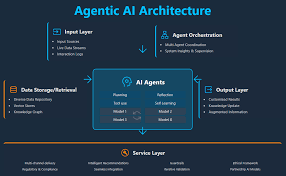
Hardware is only as effective as the software that drives it. Alongside Rubin, NVIDIA released CUDA 13, optimized for asynchronous agentic workflows. In the Generative AI era, requests were linear: Input -> Process -> Output. In the Agentic era, requests are loops: Input -> Plan -> Act -> Observe -> Re-plan.
CUDA 13 introduces “Dynamic Graph Execution,” which allows the GPU to change its execution path on the fly based on intermediate results. This is the bedrock of machine reasoning. When a Rubin-powered agent encounters an error in its logic, CUDA 13 allows it to “backtrack” and try a new branch of reasoning without flushing the entire GPU pipeline. This reduces the latency of multi-step problem solving by nearly 70%.
12. Strategic Implications for the Enterprise
For the modern enterprise, the arrival of Rubin signals a change in strategy from “AI experimentation” to “AI industrialization.”
The “Buy vs. Build” Dilemma
With Rubin, the cost of training custom models has plummeted, but the complexity has skyrocketed. Companies are no longer just buying “software”; they are building “intelligence factories.” This requires a shift in the workforce. We are seeing a decline in demand for “prompt engineers” and a massive surge in demand for “AI Architects” who understand how to orchestrate Rubin clusters.
Data as the New Fuel
Because Rubin can process data so fast, the primary bottleneck has shifted to data quality. Enterprises are now using Rubin-powered DPUs to scrub, de-duplicate, and label their proprietary data in real-time, creating a “data loop” where the AI gets smarter every time it is used.
13. Sustainability: The Green AI Paradox
Critics often point to the 600kW power draw of a Rubin rack as an environmental disaster. However, the reality is more nuanced. Because Rubin is 4x more efficient per token than Blackwell, it actually reduces the total energy required to complete a specific task.
For example, a task that required 100 Blackwell GPUs and 24 hours can now be done with 20 Rubin GPUs in 4 hours. The “peak” power is higher, but the “total” energy consumed is lower. NVIDIA is aggressively pushing this “Green AI” narrative, partnering with utility companies to ensure that every Rubin-powered “AI Factory” is backed by carbon-free energy.
14. The Competitive Landscape: The Great Wall of NVIDIA
How are competitors responding? While AMD’s MI400 and Intel’s Falcon Shores 2 offer compelling alternatives, NVIDIA’s “Moat” is no longer just the chip—it is the ecosystem.
The Rubin platform’s integration of NVLink 6 and the Vera CPU makes it nearly impossible for a competitor to provide a “mix-and-match” solution. If you want the performance of Rubin, you have to buy the entire NVIDIA stack. This vertical integration has turned NVIDIA into the world’s most valuable company and the de facto gatekeeper of the AI era.
15. The Shift to Physical AI and Spatial Intelligence
A significant portion of Rubin’s architecture is dedicated to “Spatial Intelligence.” This refers to an AI’s ability to understand the 3D world. In the Blackwell era, AI lived in a 2D world of text and images. Rubin is built for the 4D world (3D space plus time).
The SMs in the Rubin GPU have specialized hardware for “Ray Tracing for Inference.” This isn’t for video games; it’s for robots to calculate the distance and trajectory of physical objects in real-time. A warehouse robot powered by a Rubin-edge chip doesn’t just “see” a box; it understands the physics of that box—its weight, center of gravity, and how it will move when picked up.
16. The Sovereign AI Arms Race
In 2026, data has become a matter of national security. Governments have realized that if their national intelligence is hosted on a cloud in another country, they have lost their sovereignty.
We are seeing “Rubin Nationalism,” where countries are competing to secure the first shipments of Rubin chips. The United States has implemented strict export controls on Rubin, treating it with the same level of scrutiny as nuclear technology. For a nation, owning a Rubin cluster is the modern equivalent of having a domestic oil refinery or a national power grid.
17. The Human-AI Interface: Beyond the Keyboard
As Rubin-powered agents become more capable, our way of interacting with them is changing. We are moving away from typing prompts and toward “Ambient Interaction.”
Rubin’s low-latency processing allows for real-time voice and vision synthesis that is indistinguishable from a human. This has led to the rise of “Digital Twins” of employees—AI agents that look like you, sound like you, and have access to your emails and files, allowing them to attend meetings or draft reports on your behalf. This level of autonomy is only possible because Rubin can handle the massive multi-modal workloads required to sync voice, video, and logic simultaneously.
18. The Challenges of Complexity: The “Fragility” of the Stack
With such high levels of integration, the Rubin ecosystem is inherently fragile. A failure in a single NVLink connection can bring down an entire NVL72 rack. This has created a new industry of “AI Maintenance,” where specialized technicians use AI (ironically) to monitor the health of the Rubin clusters.
Predictive maintenance is now a requirement. The BlueField-4 DPU monitors the voltage and temperature of every component in the rack, predicting a failure before it happens and rerouting the compute workload to other parts of the cluster. This “self-healing” capability is the only way to keep a 600kW system running 24/7.
19. Looking Forward: The Path to Feynman
Even as the world adapts to Rubin, NVIDIA is already whispering about the 2028 “Feynman” architecture. If Rubin is the architecture of Reasoning, Feynman is expected to be the architecture of Discovery.
The roadmap suggests that Feynman will integrate “Quantum-Classical Hybrid” processing, allowing AI to solve problems that are currently impossible for even the most powerful Rubin clusters—such as protein folding at a sub-atomic level or simulating the first micro-seconds of the Big Bang.
20. Conclusion: The Era of the Intelligent Factory
The Vera Rubin architecture represents the final brick in the wall of the “AI Industrial Revolution.” We have moved from the “Computer” to the “Data Center” to the “AI Factory.”
In these factories, data goes in, and intelligence comes out. This intelligence is not a static product; it is an active, agentic force that is reshaping every aspect of our lives. Whether it is a robot performing surgery, a software agent managing a city’s traffic flow, or a research agent discovering the next cure for cancer, the heart of that intelligence is a Rubin GPU.
The “Dark Matter” of the digital universe has been illuminated. We now have the tools to see, understand, and interact with the world in ways that Vera Rubin herself would have found miraculous. The age of the reasoning machine is no longer a dream of the future; it is the reality of 2026.
Key Takeaways for Enterprises:
- Upgrade Cycle: If you are still on Hopper (H100), the leap to Rubin offers a 10x ROI in terms of energy and throughput. The gap is now too large to ignore.
- Cooling is Key: Do not buy Rubin chips without first auditing your data center’s liquid cooling capacity. You cannot “air cool” your way into the future.
- Focus on Agents: Don’t just build chatbots. Use Rubin’s NVFP4 capabilities to build reasoning agents that actually do work, rather than just talking about it.
- Sovereign Data: In the Rubin era, your proprietary data is your most valuable asset. Protect it by building your own intelligence factories rather than relying solely on third-party APIs.
The Rubin era has begun. The only question left is: What will you build with the power of 300 billion transistors?Read more…